Guide · 8 min read
Student mode: a home screen that measures studying
Last updated:
A student's relationship with their phone has two bad settings. Switch it off and you lose the dictionary, the class chat, the alarm. Leave it on and the evening gets cut into pieces. StillPhone'sStudent mode tries a third one: the phone stays on, but its home screen becomes a screen that measures your studying.
Two pages, one home screen
In Student mode the home screen has two pages. The first is StillPhone's usual quiet screen: a clock, a search field and your apps as a plain text list, no icons. The second is a study page — question tracking and a Pomodoro timer. Press home and you land on one of them; swipe to move between the two.
The real screens
These are from an actual phone. The order follows the product itself: from the home screen down to the bottom of the stats.
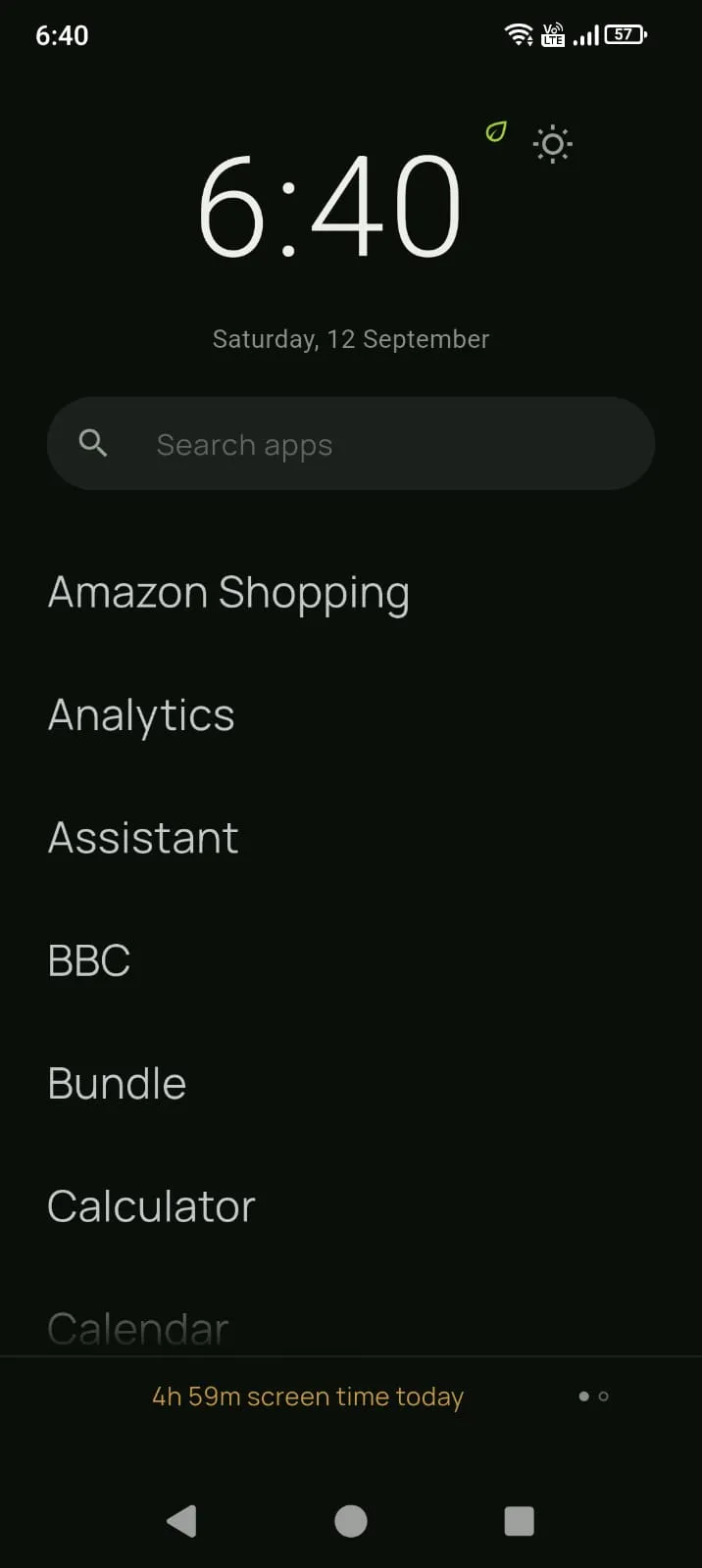 Home screen — clock, search and a plain app list
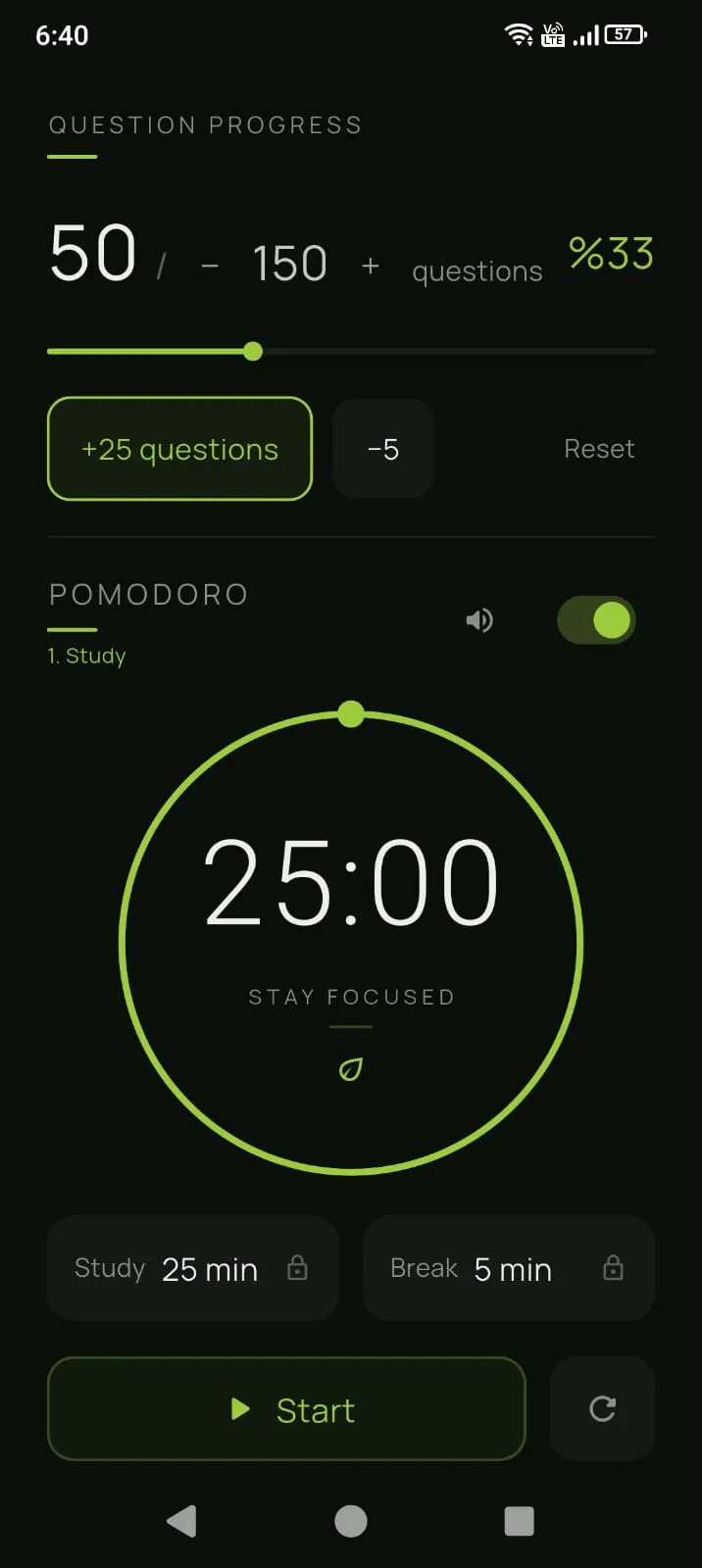 Study page — solved questions and a ready-made pomodoro
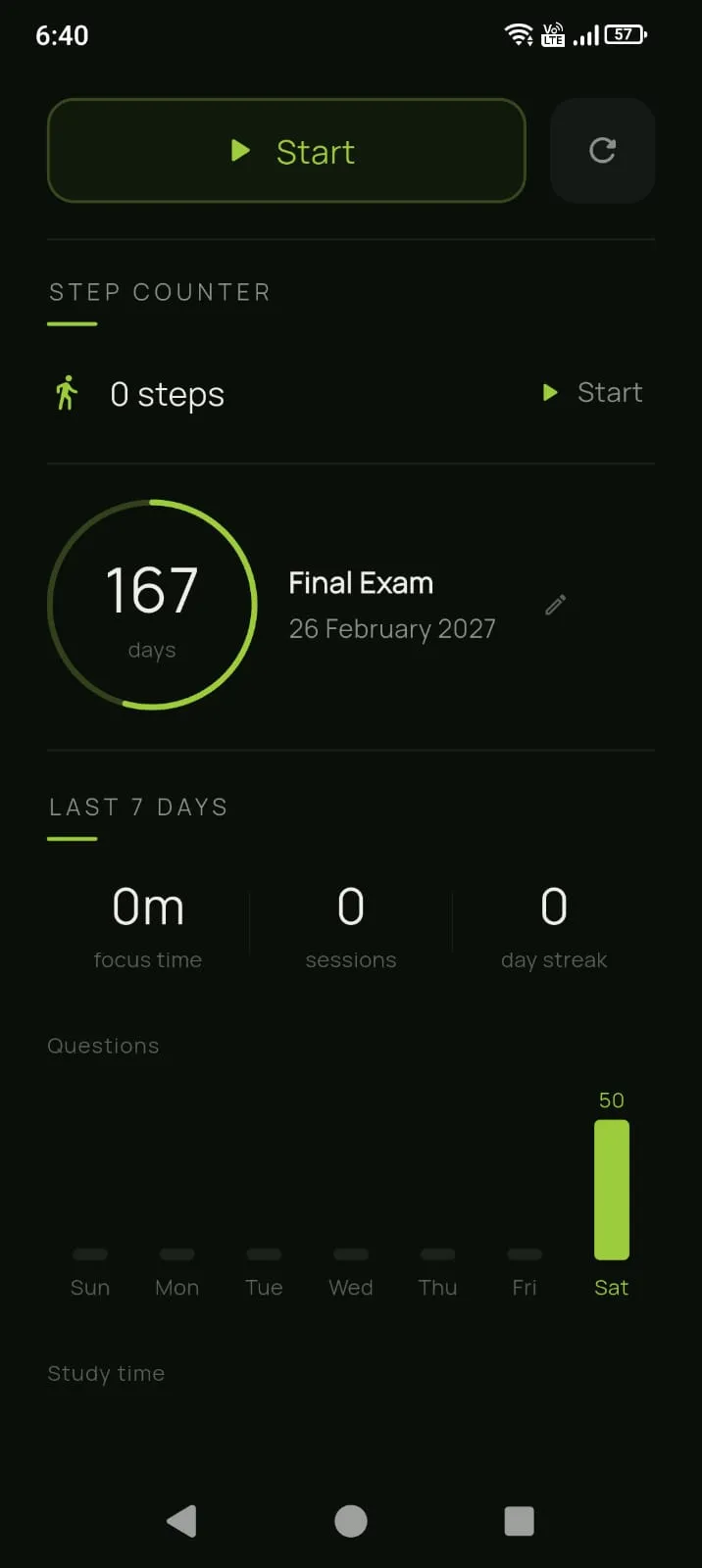 Step counter and days left until the exam
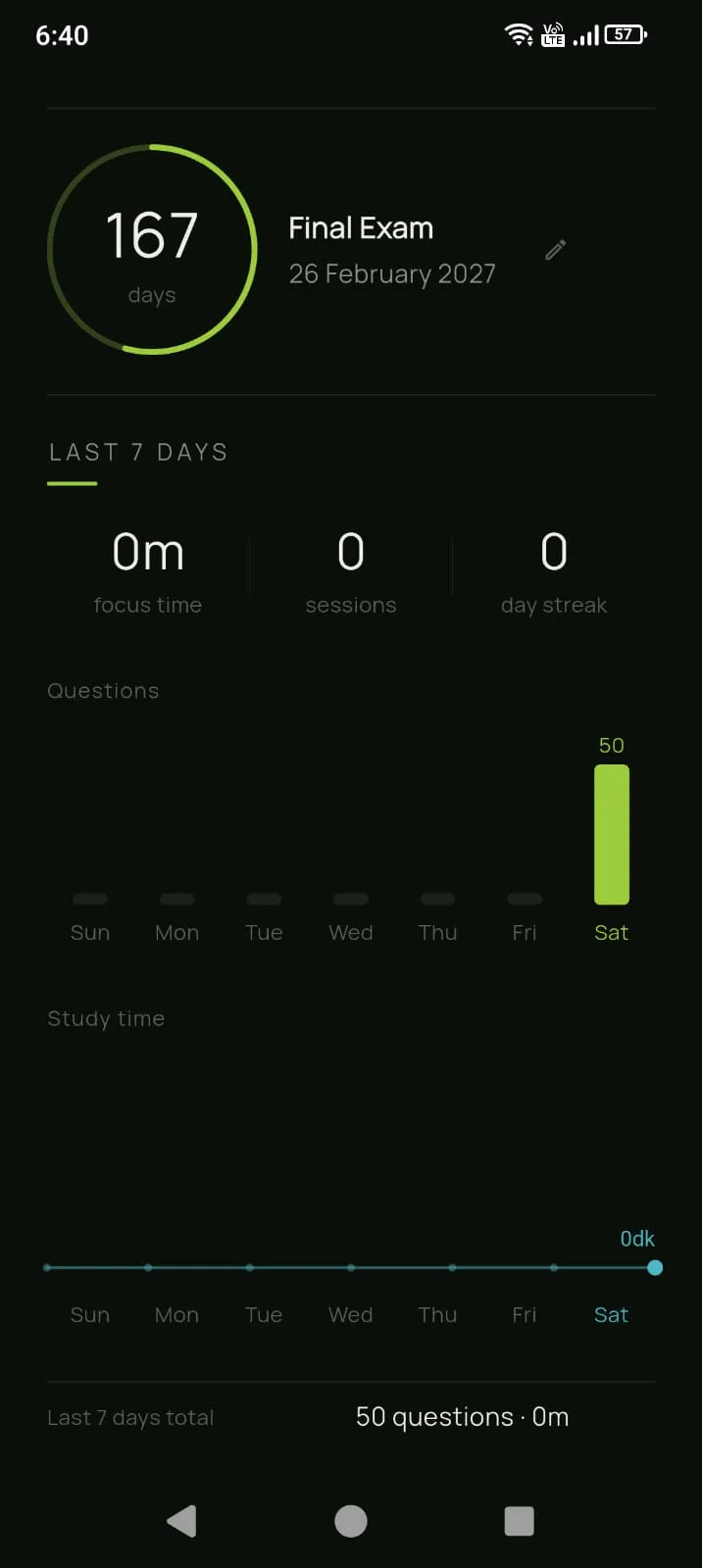 Last 7 days — both questions and study time
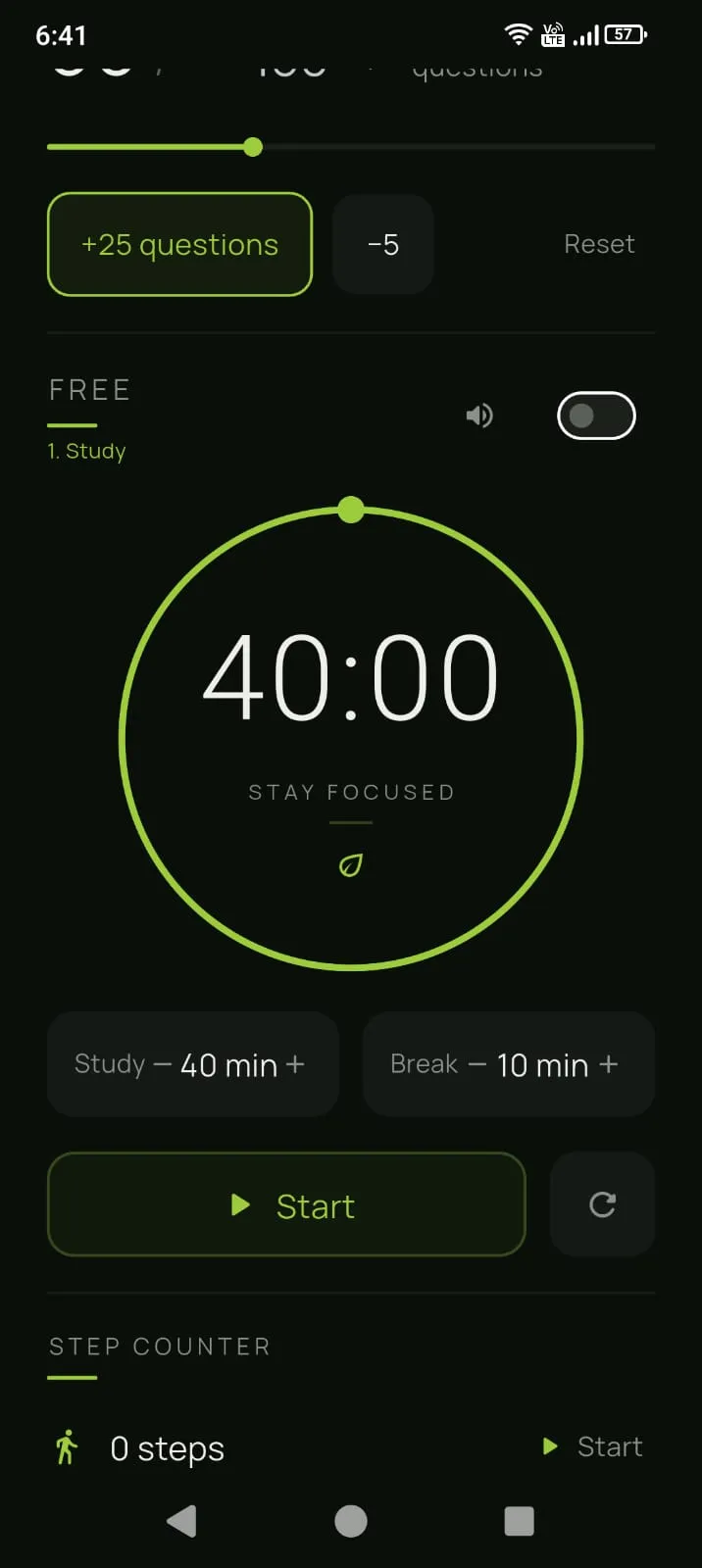 Free mode — you set the durations yourself
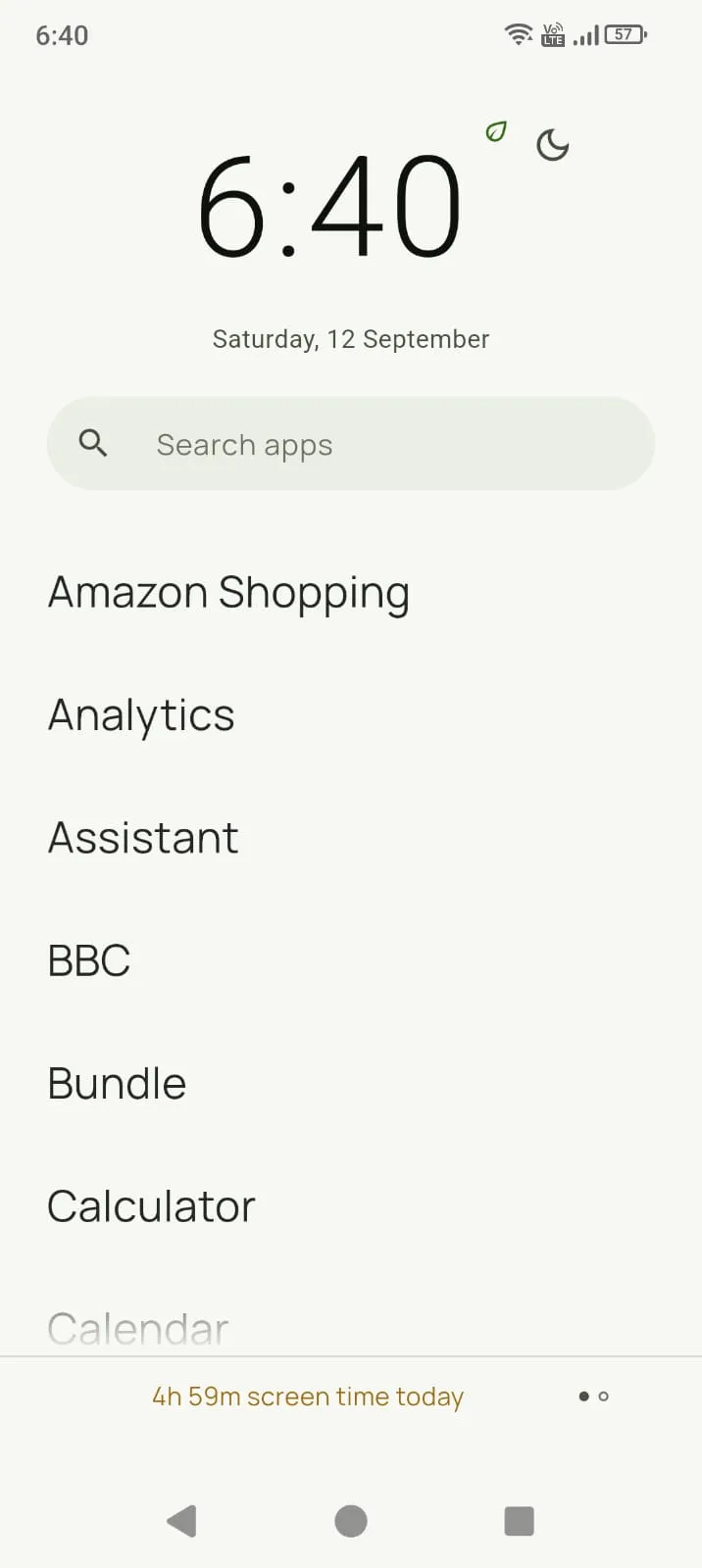 Home screen — clock, search and a plain app list
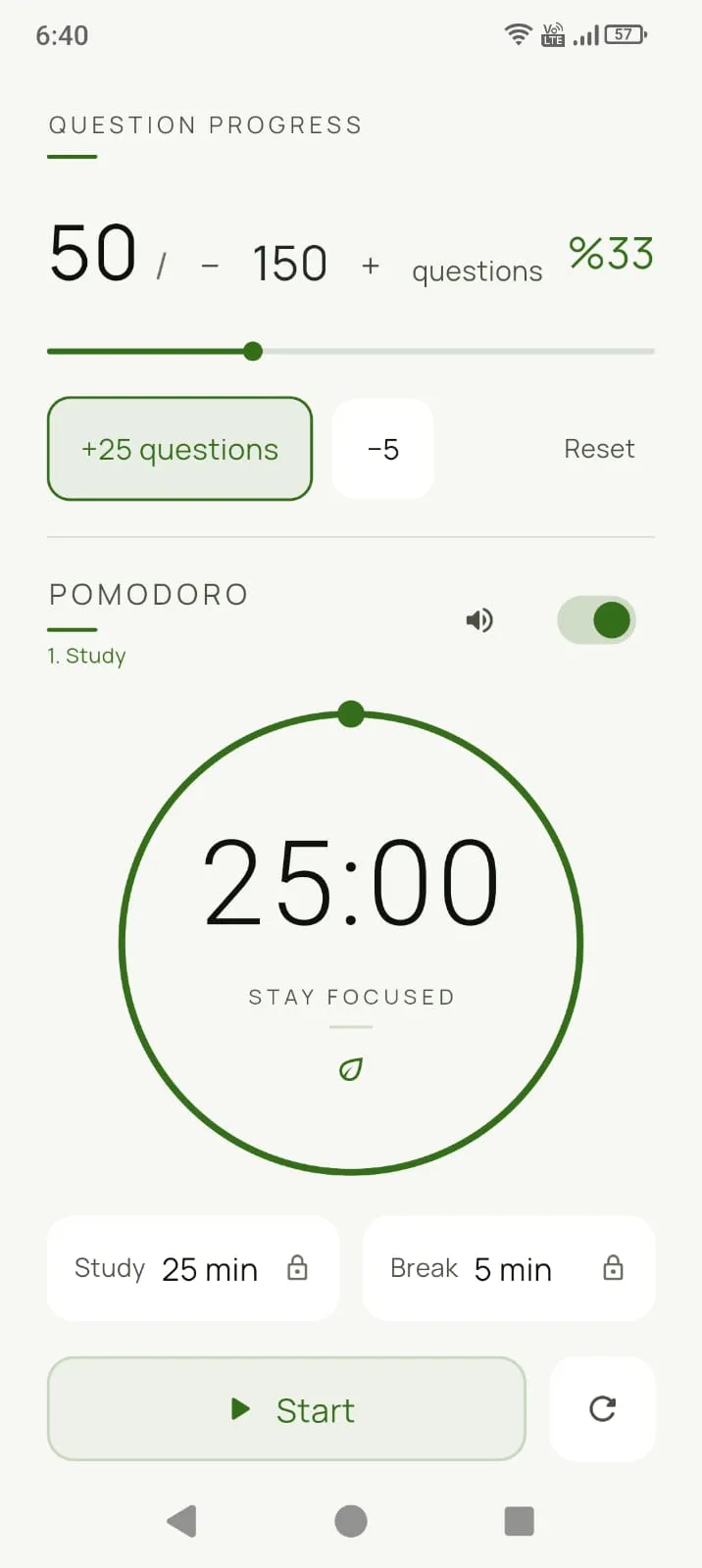 Study page — solved questions and a ready-made pomodoro
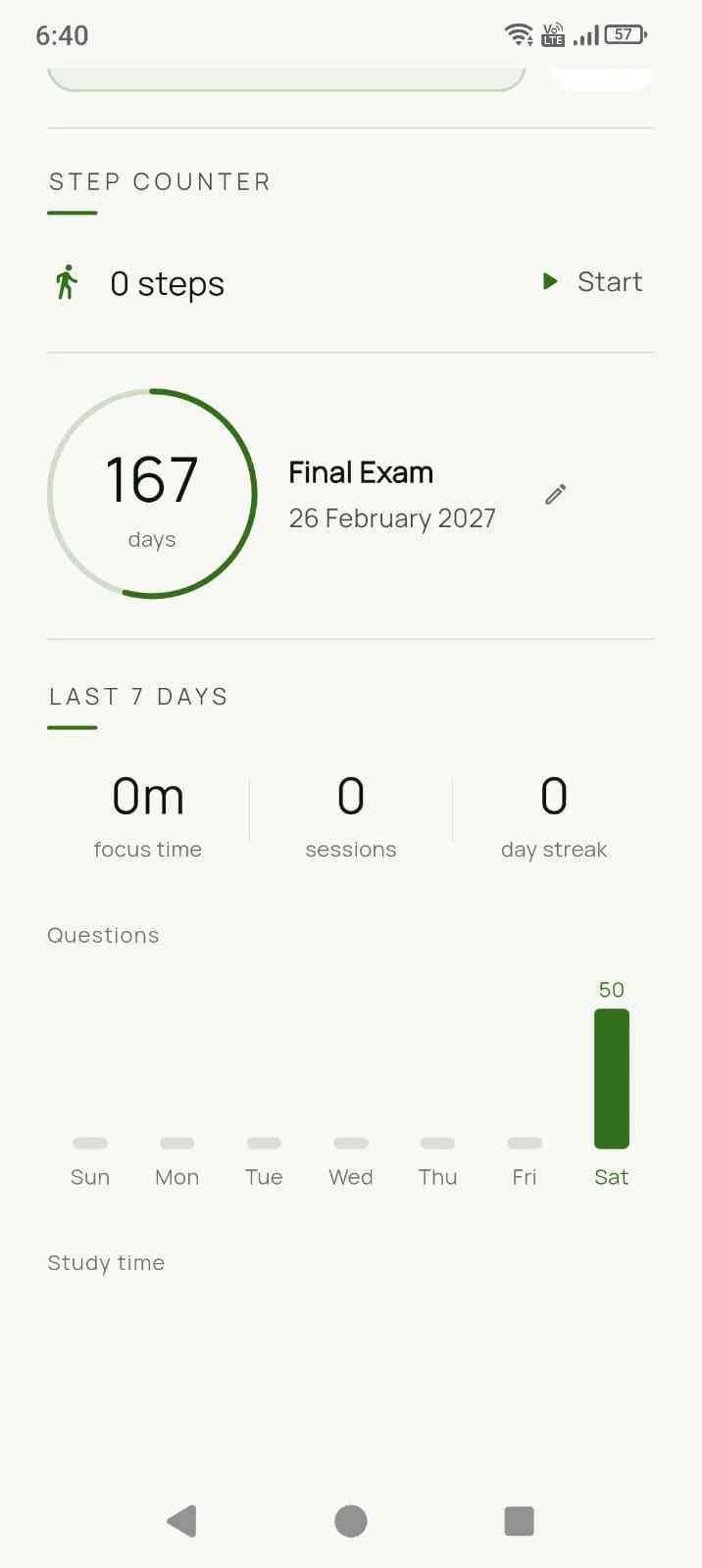 Step counter and days left until the exam
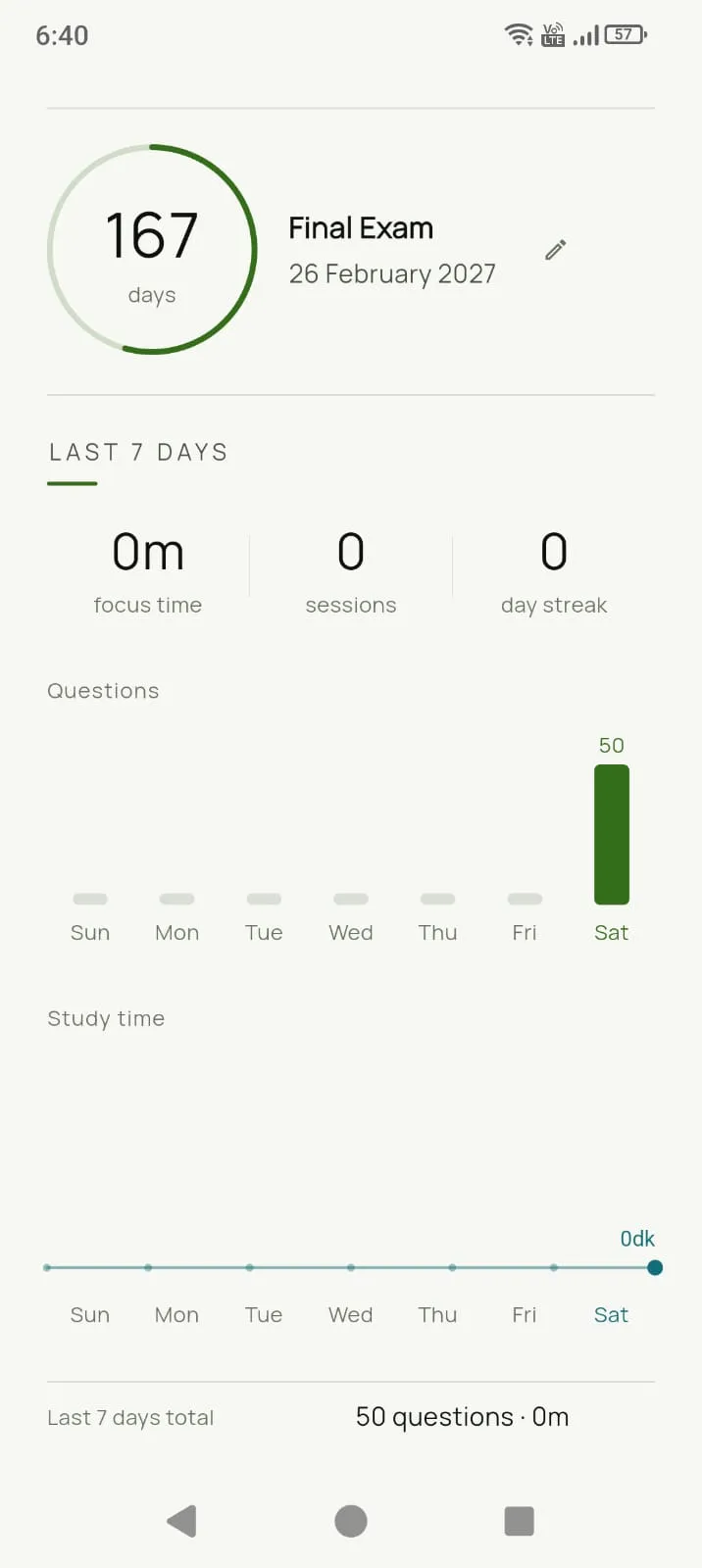 Last 7 days — both questions and study time
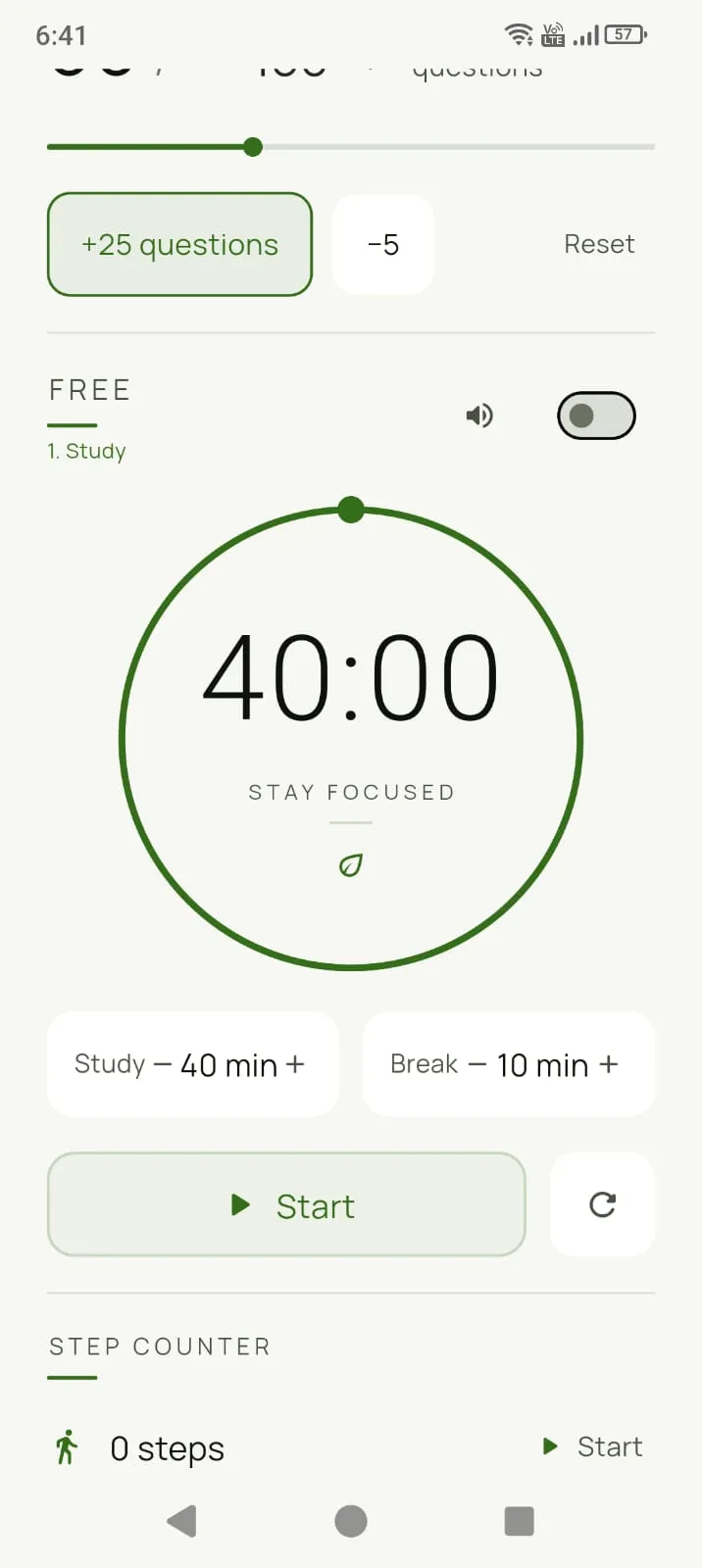 Free mode — you set the durations yourself
A ready-made Pomodoro: the right first step
If you don't have a study habit yet, the hard decision isn't "how many hours today". It's starting. That's why Pomodoro is a good first step: the promise is small. Not three hours — twenty-five minutes. A twenty-five-minute promise survives a tired evening, and a small promise you keep is worth more than a big one you don't.
The timer comes ready. Nothing to install or set up: the Start button is already on the second page of your home screen. In Classic mode the durations are fixed at25 minutes of study and a 5-minute break — that's what the lock icon means. Fixed on purpose: on day one, deciding how long a session should be is one more decision standing between you and starting.
Once the habit holds, you can go longer. In Custom mode study sessions run from 5 to 90 minutes and breaks from 5 to 30 minutes. Start at 25, and over a few weeks move to 45 or 60 — at the pace of your own attention span, not somebody's advice.
One detail matters: you can't change the duration while the timer is running. Also on purpose. Cutting a session to fifteen minutes the moment it gets hard is exactly what Pomodoro exists to prevent. Decisions get made when they're easy, not when they're tested.
Solved questions: the visible output of studying
"I studied today" is a vague sentence. "I solved 150 questions today" isn't. That's what the top half of the study page is for: set a target, add to it as you go. You add in batches — tapping the phone after every question would interrupt the very thing you're counting — so you finish a practice set and add twenty-five at once. Undo a wrong entry, reset at the start of the day.
The percentage is small but does real work: it tells you at a glancehow far into your target you are. Seeing 40% at midday is a different thing from guessing at night whether you did enough.
Days until your exam
You type the name of your exam and its date; the screen shows the days left. There's deliberately no preset list of exams — StillPhone is used in many countries, every exam calendar is different and changes every year. A free text field fits a medical board exam, a driving test and a language certificate alike.
The countdown isn't there to scare you; it's there to give youscale. "There's plenty of time" and "84 days left" are not the same sentence. The second one can be split into weekly plans. The first can't.
A daily step counter: the counterweight to a day at the desk
A heavy study day is mostly spent sitting. Lectures, then review, then a practice test — all in the same chair. Student mode includes adaily step counter that uses the phone's own motion sensor, so you see how much you've moved on the same screen.
Why a step counter on a study screen? Long stretches of sitting lower how much energy you use in a day, and regular walking can help close that gap — for calories burned and for body composition. But the real gain isn't the number itself; it's that the number isvisible. Someone who sees 1,200 steps at 7 p.m. goes for a walk. Someone who never looks doesn't.
It also makes breaks honest. Five minutes staring at a screen and five minutes on your feet are not the same break. The step counter is the one indicator that tells you which one you took.
Weekly stats: questions and study time, side by side
One day is misleading. A bad day says "I can't study"; a good day says "I've got this"; both are wrong. So the stats screen looks atthe last seven days and keeps two different things at once:
- Questions solved — output.
- Study time and completed Pomodoro sessions — input.
- Days studied in a row — continuity.
Seeing them together says something neither says alone. High time with few questions usually means your attention is drifting or the topic is new. Many questions in little time usually means you're re-solving material you already know. The ratio asks a far more useful question than "how many hours did I study": what did those hours turn into?
What keeping stats actually does for a student
The benefit of measuring isn't motivation — it'scorrection. A study routine nobody measures gets tested only by the exam result, which means waiting months to find out what to change. With weekly numbers, the same correction takes seven days.
- A record instead of a guess. People misremember their own study time in a consistent direction: good days grow, empty days shrink. A record removes that margin.
- The shape of the week becomes visible. Seven bars show which days reliably go empty. For most students that isn't random — a particular day falls apart for a particular reason. You can't fix what you can't see.
- Continuity becomes a target. A day streak puts something concrete up against "it's fine if I skip today". A small resistance, but a real one.
And there's a reason all of this lives on the home screen. A separate study app works as long as you remember to open it. The home screen can't be forgotten — it's there every time you unlock the phone.
The timer isn't what keeps you off your phone
On its own, a Pomodoro timer never blocked anything — it records that you drifted; it doesn't stop you. That's the honest limit of every study timer, and wesaid so plainly elsewhere.
Student mode doesn't pretend otherwise. The blocking is done at device level, underneath it: the apps you chose to hide stay hidden, apps with a time budget still open only within their daily minutes, and leaving still follows the same rules. Student mode adds one thing on top — the phone now shows not only what you gave up, but what you're building.
You pick the mode during setup and can change it later — when exam season is over, going back to Normal mode doesn't mean setting the phone up again.
StillPhone turns the Android you already own into a study phone. You choose which apps stay; Student mode adds the Pomodoro timer, question tracking and weekly stats to the home screen.
No card · Set up from a computer · Android